Today marks the Seventh Week (49th-day) of the self-immolation and passing of the martyr Lobsang Palden, popularly known as Lobga Rangzen. He sacrificed his life on July 2, 2026, in front of the United Nations Headquarters in New York City, United States, leaving behind a final testament stating that his action was undertaken in protest against the Chinese Communist Party’s policies and its systematic eradication of the Tibetan identity in Tibet, while calling on all Tibetans to unite and campaign for Tibet’s independence.
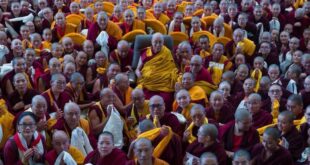
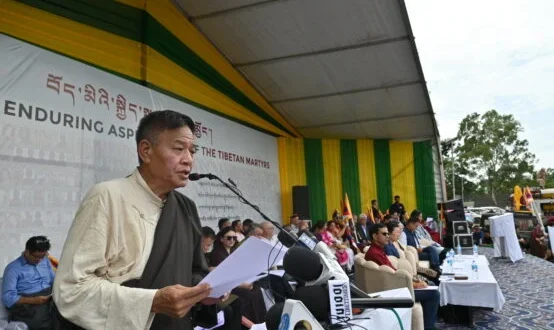
In observance of the 49th-Day, the Kashag and the Tibetan Parliament-in-Exile today, are jointly organising this official solidarity prayer service and peace march to express our deep condolences and respect to the late Lobga Rangzen and all those Tibetans who have sacrificed their lives for the cause of Tibet. We express our strong opposition to the Chinese Communist Party’s implementation of repressive policies in Tibet, particularly the so-called “Law on Promoting Ethnic Unity and Progress”.
Immediately upon receiving news of the Lobga Rangzen’s self-immolation protest, the Office of Tibet, Washington, D.C., coordinated with the International Campaign for Tibet in convening an urgent online meeting to disseminate verified information to media outlets and instructed Tibetan associations across North America to organise solidarity prayer services. Simultaneously, a request was made through the Office of His Holiness the Dalai Lama, to seek His Holiness’ prayers for the late Lobga Rangzen. The message from the Office of His Holiness the Dalai Lama was relayed to the immediate family members. Furthermore, on behalf of the Kashag, Kalon Kunga Tashi of the Department of Security visited the Phuntsok De-zhi community hall of the New York & New Jersey Tibetan Association that very night to extend our heartfelt condolences.
In the official public statement issued on July 3rd, the Sikyong said: “The unfolding genocide inside Tibet and the enforcement of the draconian ‘Ethnic Unity and Progress Law’ on 1 July are what drove Lobga Rangzen to this tragic decision.” An official prayer service was organised that day.
To draw international attention to the Chinese government’s ongoing policy of eradicating the Tibetan identity, 157 Tibetans inside Tibet have been known to have self-immolated since 2009, out of which 136 died, 9 have survived, and the status of 12 remains unknown. In exile, including the late Lobga Rangzen, 11 Tibetans have self-immolated, of which 9 died and 2 survived.
Not a single brave Tibetan who self-immolated—whether inside Tibet or in exile—ever harmed the lives or property of others. Rather, they sacrificed their own precious lives with the sole motivation of drawing the attention of the Chinese government and the international community to the plight of the Tibetan people. The Special Tibetan General Meeting on September 28, 2012, recognised self-immolation as the highest form of nonviolent act of protest and passed a resolution urging “all Tibetans to preserve their precious human lives henceforth.” The Kashag reiterates its appeal to all Tibetans to remain steadfast in serving the Tibetan cause throughout their lives.”
Following the tragic death of the late Lobga Rangzen, Tibetans and friends of Tibet around the world continue to hold various peaceful commemorative events in his honour and protest the Chinese government. We express our heartfelt gratitude and deep appreciation to all media outlets for their widespread coverage of these campaigns and to everyone involved for their steadfast expressions of solidarity and support. The Kashag appeals to the Tibetans both inside and outside Tibet to stay vigilant, prudent and united in resisting the policies of the Chinese government aimed at eradicating the Tibetan identity.
The sinister intent behind the Chinese Communist Party’s so-called “Law on Promoting Ethnic Unity and Progress”, implemented on July 1, 2026, includes:
- Erosion of Tibetan Language: The Chinese government has placed nearly one million Tibetan children into colonial-style residential schools, forcing them to learn Chinese and adopt a Chinese identity while demanding absolute loyalty to the Chinese Communist Party. This education system strips away their right to grow up within their own culture and learn their mother tongue. Even private study of the Tibetan language during summer and winter vacations is prohibited. Furthermore, this legislation mandates Chinese as the medium of instruction from preschool, eliminating environments for using the Tibetan language in government offices and severely restricting the scope of Tibetan language.
- Distortion of Tibetan History and Identity: The legislation directs the Chinese central government to conduct “concentrated and diverse forms of publicity and educational activities to forge a strong sense of community of the Chinese nation (Zhonghua Minzu).” Under the guise of “ethnic unity”, this legislation also authorises intensified control and surveillance over the way of life, gatherings, and expressions of opinion of the Tibetan people, thus establishing a legal pretext to punish even minor cultural preservation efforts.
- Forced Cultural Assimilation at the Grassroots Level: By ordering to conduct traditional practices such as weddings and funerals as per “public order and good customs” and to incorporate “consciousness of the common identity of the Chinese nation” into grassroots village regulations, Tibet’s unique culture and traditions are being forcibly assimilated.
- Sinicisation of Tibetan Buddhism: For years, the Chinese Communist Party has exercised total control over the properties, administration, and education of Tibetan monasteries while politicising the recognition of reincarnated Lamas. The provisions of this legislation further demand religious sites to “adhere to the direction of Sinicising religion,” thereby undermining the authentic spiritual tradition of Tibetan Buddhism developed over thousands of years and converting it into a tool for communist ideology and political compliance.
- Ethnic Integration: By promoting a “social environment of mutual integration,” implementing specific “measures regarding housing and population management, strengthening service platforms for cross-regional population transfers, supporting cross-regional recruitment between higher education institutions in ethnic and non-ethnic areas, and encouraging cadres to go to grassroots ethnic regions, the Chinese government is pushing intermarriage to reduce Tibetans into minority in their own homeland.
- Technological Surveillance: Ethnic affairs are being integrated into the overall “social governance mechanism.” Supported by technology such as AI surveillance, electronic ID tracking, facial recognition, GPS location systems, DNA profiling, iris scanning, and grid-based social management systems, every aspect of an individual’s daily life and movement is being strictly monitored and controlled.
- Political and Social Coercion: All economic and social development projects are contingent upon “firmly forging the consciousness of the common identity of the Chinese nation,” “safeguarding national unity,” and “opposing separatism.” By combining economic incentives with political intimidation, Tibetans are subjected to forced assimilation into the dominant Han society.
- Political Vetting of Tibetan Cadres: Cadres or entities failing to strictly implement these regulations face investigations and criminal prosecution. Since the recruitment, selection, deployment, and management of cadres must undergo political vetting, Tibetan cadres are targeted as potential offenders. Simply failing to “strictly enforce” the law—let alone causing harm to “ethnic unity”—is deemed a criminal offence, forcing Tibetan cadres to live in constant fear under this regulation day and night.
- Violation of Autonomy Rights: The legislation denies even the nominal rights and authority to establish local autonomous bodies, formulate and enact local autonomous regulations guaranteed under the Chinese constitution and the Regional Ethnic Autonomy Law by declaring to “uphold and improve the structure of ethnic work with the Party committee’s unified leadership, government management in accordance with law, and in which the United Front Work Department takes the lead in coordination, the ethnic work departments perform their duties, all departments join forces to cooperate, and the whole society participates, to improve the ethnic work coordination mechanism.”
- Establishment of Extraterritorial Jurisdiction: By asserting legal accountability against overseas individuals or organisations that undermine the implementation of this legislation or engage in ethnic separatist activities, the Chinese Communist Party seeks to bring Tibetans abroad, supporters of other oppressed peoples under Chinese government’s rule, and critics of these regulations under its extraterritorial legal jurisdiction.
In short, whether the objectives of this law succeed in the long run depends on how Tibetans inside and outside Tibet resist this sinister strategy and the extent to which the international community supports the truth and the just cause of the Tibetan people.
We appeal to the Tibetans in exile living in free countries to conduct various campaigns non-violently, lawfully, and with dignity. Starting from our households, Tibetans both inside and outside Tibet must make greater efforts to preserve Tibet’s unique religion, culture, language, and traditions to counter the Chinese government’s policies aimed at eradicating Tibetan identity.
We appeal to Governments and Parliaments of free nations around the world to confront the Chinese government’s implementation of genocidal policies in Tibet through its blatant violation of international law and global order. We urge the international community to recognise the Sino-Tibetan conflict as an unresolved international legal issue and not an internal matter of China. And we seek your support in the resumption of Sino-Tibetan dialogue based on the mutually beneficial Middle-Way Approach policy without preconditions. We also request the think tanks and media organisations to conduct fair, objective analyses and accurate reporting.
We also urge the authorities of the Chinese government to stop acting against the progress of human society, cease clinging solely to the perpetuation of their power, and immediately halt policies aimed at eradicating the identities of other non-Chinese nationalities.
The Central Tibetan Administration remains firmly committed to pursuing resolution of the Sino-Tibetan conflict based on the Middle-Way Approach policy unanimously adopted by the Tibetan Parliament-in-Exile. Holding the courageous spirit of the Tibetans who sacrificed their lives for our cause deep in our hearts, we hold an unyielding pledge to continue working tirelessly so that their sacrifices do not go in vain.
In conclusion, we offer our deepest condolences and solidarity to the family members and relatives of the late Lobga Rangzen and all the other Tibetan martyrs who sacrificed their lives for Tibet. We pray that they may be embraced by the supreme compassionate Chenrezig (Avalokiteshvara) and be reborn as Tibetans to continue serving the cause of Tibet.
Kashag
August 20, 2026
………………………………………………………………………………………………………………………………………………………………………………………………………………………………
* Disclaimer: This document is an English translation of the original Tibetan text. In the event of any discrepancies, ambiguity, or conflict between the two versions, the original Tibetan text shall prevail as the final and authoritative version.