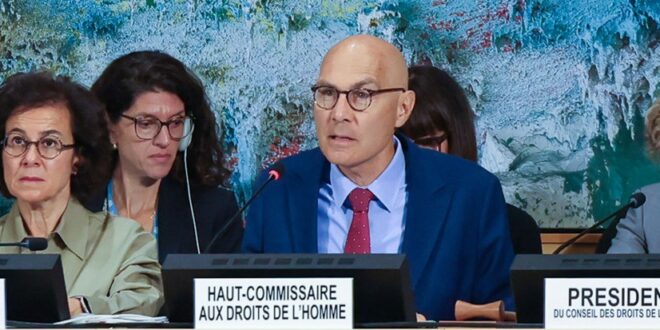
Geneva, 8 September 2025: At the opening of the 60th session of the United Nations Human Rights Council, High Commissioner Volker Türk issued a stark warning: human rights, the foundation of peace, justice, and human dignity, face unprecedented global threats. Citing crises in Ukraine, Sudan, Myanmar, the Democratic Republic of the Congo, and Gaza, he condemned atrocities including bombings, torture, sexual violence, forced displacement, and political repression. Beyond conflict zones, he pointed to shrinking civic space, retreating multilateralism, and discrimination against minorities, women, and LGBTQ+ communities. Despite these challenges, he noted progress in treaty ratifications, death penalty abolition, and local human rights initiatives, calling for strengthened education and collective action.
In parallel, the 60th anniversary of the Tibet Autonomous Region (TAR) was recently marked by China, celebrating decades of economic growth, infrastructure development, and modernisation initiatives. Official reports depict these achievements as evidence of progress under Chinese governance. Yet, independent observations reveal a contrasting reality for many Tibetans, who continue to face profound social, cultural, and political restrictions.
Religious freedom and cultural expression remain heavily curtailed. Individuals such as Asang have been detained for singing songs in honour of His Holiness the Dalai Lama, illustrating the severe limits on spiritual and cultural practices. Families endure deep emotional trauma, exemplified by Gompo Kyi, who attempted suicide due to her brother’s prolonged detention. The death of Gonjo Tulku Palden Wangyal in Chinese custody further highlights the risks faced by Tibetan activists and religious leaders.
Education and language policies have further exacerbated cultural suppression. Tibetan children are often placed in state-run boarding schools at a young age, where curricula prioritise Mandarin and downplay traditional Tibetan culture. Observers have noted that these practices threaten the transmission of Tibetan heritage, contributing to a growing sense of alienation among younger generations.
The UN High Commissioner and the Tibet Bureau have consistently raised these concerns in international forums. They report increasing restrictions on Tibetan cultural and religious freedoms, including controls over monasteries, the forced assimilation of children, arbitrary detention, surveillance, and the criminalisation of peaceful expression. Such measures, the UN notes, contravene international human rights obligations.
At the opening of the 60th UNHRC session, High Commissioner Volker Türk reaffirmed the Office’s ongoing engagement with China, noting that progress remains absent regarding the protection of the rights of Uyghurs and other Muslim minorities in East Turkestan, as well as Tibetans in their regions. He affirmed that this remains a priority for his Office’s dialogue and monitoring efforts.
Concluding his address, the High Commissioner reaffirmed the universality and indivisibility of human rights, underscoring that their protection is vital for the well-being of all people. He called for renewed global solidarity and urgent action to uphold these rights, warning that the world stands at a critical crossroads where inaction could imperil the values that underpin peace and justice.
-Report filed by Office of Tibet, Geneva