Dharamshala: Chinese authorities have intensified restrictions on monasteries in Tibet, expelling all monks under the age of 18 from Tsang Monastery (Tib: གཙང་དགོན་པ།) and subjecting monks to strict controls and severe pressure. According to reliable sources, the strict measures contributed to the death of Shersang Gyatso, a senior monk who reportedly took his own life in protest against the harsh treatment of monks by the Chinese authorities at the monastery.
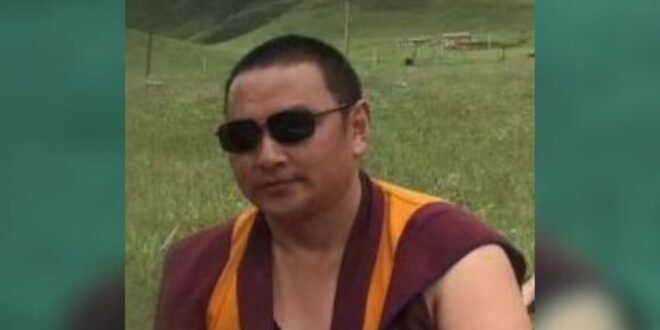
On 18 August, Tibetan monk Shersang Gyatso, head of Tsang Monastery’s Administrative Committee, in Ba County in Tibet’s traditional province of Amdo, took his own life on the upper floor of the monastery’s shop. He was only 52 years old at the time of his passing. His death has occurred against the backdrop of strict restrictions imposed by the Chinese government, which have created severe hardships for monks, particularly those in leadership positions. Reports indicate that the monastery and surrounding Tibetan communities remain under strict government control, limiting the availability of detailed information and photographic evidence regarding the incident.
In the days surrounding the 90th birthday of His Holiness the Dalai Lama, Chinese authorities carried out thorough investigative searches at Tsang Monastery where police conducted room-to-room searches of the monks’ living quarters. Authorities reportedly seized photographs of His Holiness the Dalai Lama found in the care of few monks. Following the searches, the monastery was placed under tight restrictions, with monks’ movements heavily curtailed. Authorities also expelled all monks under the age of 18 from the monastery.
Authorities have intensified restrictions on a Tibetan monastery following His Holiness the Dalai Lama’s birthday, with measures beginning on 20 July that include continued house searches of monks and mandatory daily political indoctrination sessions. These actions have severely disrupted the monks’ ability to freely engage in traditional religious practices, fueling widespread sorrow and resentment over government intrusion into their spiritual lives. Notably, during the Dalai Lama’s birthday, the long-standing custom of nomadic communities inviting monks to perform rituals and recite prayers—particularly observed in the fifth and sixth Tibetan months—was prohibited, as monks were barred from visiting these communities, thereby depriving both the monks and the nomads of their religious freedom and curtailing deeply rooted cultural traditions.
Venerable Shersang Gyatso was born in Arig Village, Sogzong County, in the Malho region (Ch: Huangnan Tibetan Autonomous Prefecture) in the traditional province of Amdo. He studied at Gyupa College, one of the five traditional colleges of Tsang Monastery, and was recognized among the thousand resident monks as an outstanding practitioner, admired equally for his learning and his moral integrity. Tsang Monastery itself is home to monks from three major regions: Malho (Ch: Huangnan Tibetan Autonomous Prefecture), Tsolho (Hainan Tibetan Autonomous Prefecture), and Golog (Guolou Tibetan Autonomous Prefecture).
China’s crackdown on Tibetans’ religious freedom, particularly around His Holiness the Dalai Lama’s 90th birthday illustrates systematic violations of basic rights, including mass surveillance, detentions, and bans on religious practices. Chinese authorities confined monks and nuns in monasteries in Karze, restricted traditional religious rituals such as Sangsol incense offerings, and detained Tibetans without informing families of their whereabouts. Monasteries including Kirti were targeted with raids, interrogations, and threats of “political crimes” if they kept photos and teachings of monastery’s revered leaders like Kirti Rinpoche. Religious groups were dismantled, gatherings restricted to as few as five monks, and Tibetans were even forced to submit photos of private birthday celebrations. Armed security deployments in Lhasa and other regions reinforced Chinese government’s broader campaign to sever Tibetans’ ties with His Holiness the Dalai Lama and suppress expressions of faith, in direct violation of international human rights standards and even China’s own constitution.
– Filed by the UN, EU, and the Human Rights Desk, Tibet Advocacy Section, DIIR