Geneva: A new United Nations report has issued one of the clearest warnings to date that Chinese state policies in Tibet are actively eroding the foundations of Tibetan civilisation, threatening the survival of Tibetans as a distinct people.
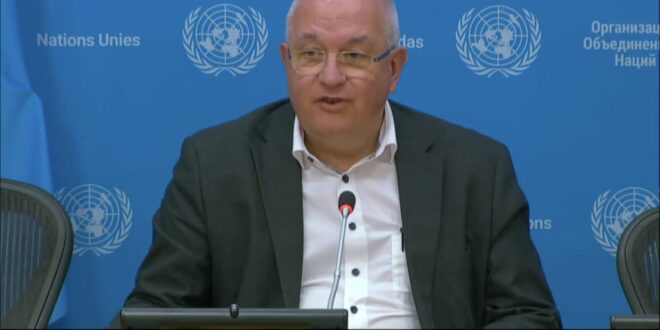
The findings appear in a report to the UN Human Rights Council by the Special Rapporteur on minority issues, Nicolas Levrat. While global in scope, the report explicitly identifies Tibet as a case where state-led policies are not merely discriminatory but constitute what the UN expert describes as “eradication in more subtle ways.”
At the centre of this warning is China’s vast boarding school system imposed on Tibetan children. The report states unequivocally that “the boarding school education system implemented by China in Tibet is aimed at erasing the Tibetan language and identity.” Tibetan children are separated from their families and communities and educated in environments where Mandarin Chinese, state ideology, and cultural assimilation dominate daily life. According to the report, this policy prevents “the intergenerational transmission of cultural, linguistic or religious elements of minorities’ identities,” a process that leads to “the extinction of the minority as a distinct group in the State population.”
The Special Rapporteur makes clear that eradication does not require mass killing to meet the threshold of grave human rights violations. He warns that targeting a people’s language, culture, and religion can be just as destructive as physical violence. Such practices, the report states, violate article 27 of the International Covenant on Civil and Political Rights, which guarantees minorities the right to enjoy their culture, practice their religion, and use their language in community with others.
These policies are not isolated, but part of a broader political project. The report notes that China has “since 2012 undertaken a nation-building process” that has resulted in “the marginalisation of minority communities,” leading to “forms of severe discrimination against non-Han minorities, such as Tibetans.” Despite constitutional guarantees of regional autonomy, the report finds that in practice Tibetan identity is being subordinated to a single state-defined national identity.
Religious life — a cornerstone of Tibetan civilisation — is also described as being under systematic pressure. The report explains that “all religious groups are required to register through State-controlled ‘patriotic’ religious associations,” and that communities refusing to comply are “denied legal status, criminalised and subjected to surveillance and the closure of places of worship.” For Tibetan Buddhists, this framework places monasteries, religious education, and spiritual authority under direct state control.
The report further highlights restrictions on ethnic and cultural organisations in China, noting that limits on minority associations undermine the ability of Tibetans to organise collectively and protect their culture. Such restrictions, it says, directly interfere with the right of minorities to exercise their identity “in community with the other members of their group.”
Crucially, the Special Rapporteur condemns assimilation policies that offer equality only on the condition that minorities abandon who they are. Such approaches, the report states, are “contrary to the principle” that states must recognise “the existence and identity of persons belonging to a minority.”
For Tibetans, the report’s message is stark. What is taking place is not merely social change or development policy, but a sustained assault on the foundations of a civilisation — its language, its spiritual institutions, its cultural memory, and its transmission to future generations. The report warns that unless these policies are reversed, the damage to Tibetan civilisation may become irreversible.
Appreciating the important UN report from the Special Rapporteur on Minorities, Thinlay Chukki, Representative of His Holiness the Dalai Lama, Tibet Bureau Geneva, noted that “this UN report confirms what Tibetans have been warning for years: China’s policies in Tibet are not about development, but about erasing a civilisation. When the state separates Tibetan children from their families and suppresses our language, religion, and culture, it is attacking the very foundations of who we are as a people. The Special Rapporteur is clear that destroying intergenerational transmission of identity amounts to eradication, even when it is carried out quietly and administratively. The international community must recognise this for what it is and act urgently to protect the survival of Tibetan civilisation.”
– Report filed by Tibet Bureau Geneva