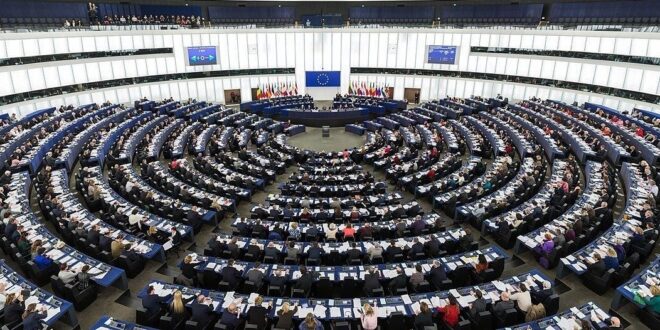
Brussels, 30 April: In a resolution adopted on Thursday, the European Parliament strongly condemned the PRC’s “Ethnic Unity Law,” marking a significant escalation in international opposition to Beijing’s policies of forced assimilation. European lawmakers warned that the law, which is set to take effect on 1 July 2026 represents a systematic attempt to erase the cultural, religious and linguistic heritage of the Tibetan people by mandating state ideology and prioritising Mandarin over native languages in all public spheres.
Central to the resolution is a firm rejection of Beijing’s interference in Tibetan spiritual affairs. The Parliament explicitly states that the succession of the Dalai Lama is a strictly religious matter that must be determined exclusively according to Tibetan Buddhist traditions, free from government coercion. Furthermore, the resolution calls for the immediate and unconditional release of high-profile political prisoners, including the 11th Panchen Lama, Gedhun Choekyi Nyima, as well as Choktrul Dorje Ten Rinpoche and Palden Yeshi, whose detentions remain a point of grave international concern.
The European Parliament is also taking concrete steps to protect the Tibetan communities in exile from Beijing’s reach. By highlighting the “extraterritorial” nature of the new law, lawmakers have urged all EU Member States to suspend extradition treaties with China to prevent the transnational repression of Tibetans living abroad. To ensure accountability, the resolution calls for the activation of the EU Global Human Rights Sanctions Regime against the officials responsible for drafting and implementing these repressive policies.
This formal stance, which has been forwarded to the Central Tibetan Administration, signals that the European Union views the preservation of Tibetan identity as a critical condition for its future relationship with China.
In her post-debate intervention Commissioner Hadja Lahbib voiced EU’s grave concern for the human rights situation in Tibet, including restrictions on freedom of religion or belief, preservation of culture and identity and the rights of the religious communities to manage their affairs without interference and to freely choose their religious leaders, including His Holiness the Dalai Lama, and in full respect of religious norms. She further added that the EU will continue to call for credible information on the whereabouts and wellbeing of the 11th Panchen Lama.
Welcoming the resolution as a clear signal of international solidarity and a reaffirmation of the importance of safeguarding the rights of Tibetan people, Rigzin Genkhang, Representative of His Holiness the Dalai Lama at the Office of Tibet in Brussels, expressed gratitude to the European Parliament for the strong and timely response. She further emphasized that continued international attention is crucial in holding the PRC accountable and in supporting efforts to preserve Tibetan cultural and religious heritage. Representative Genkhang called on other governments and international institutions to follow the European Parliament’s lead in addressing concerns related to China’s “Ethnic Unity Law”.
The adoption of this resolution was largely possible due to the consistent engagement and sustained advocacy by the Office of Tibet in Brussels. This collaboration was highlighted during the debate when a Member of the European Parliament acknowledged their meetings with the Tibetan delegation. These ongoing efforts helped ensure that the concerns of the Tibetan people remained a priority for the European Parliament.
The resolution was adopted by a large majority, with 439 votes in favor, 52 against and 71 abstentions.
– Report filed by Office of Tibet, Brussels