Preamble
For thousands of years, the Tibetan plateau known as the land of snow was governed by twelve great rulers and forty minor states. Tibet’s recorded monarchy began in the second century BC with its first king, Nyatri Tsenpo. Under successive rulers, Tibet unified and rose to become a formidable sovereign power in Central Asia.
Tibet was subsequently governed both spiritually and temporally by successive regimes—the Sakya, Phagdru, Rinpung, Depa Tsangpa and Gaden Phodrang. Throughout these periods, Tibet remained an independent country distinguished by its unique religion, politics, economy, language, culture and customs.
In 1949, the Communist government of the People’s Republic of China launched a military invasion of Tibet and in 1951, China had coerced Tibet into signing the 17-Point Agreement. By 1959, Chinese forces had completely occupied the entire region. This compelled His Holiness the Dalai Lama, Tibet’s spiritual and temporal leader, along with prominent religious figures from various Tibetan Buddhist traditions and many thousand Tibetans, to flee into exile. The brutal Chinese occupation has resulted in the deaths of over 1.2 million Tibetans and the destruction of more than 6,000 monasteries. Widespread environmental devastation has followed through aggressive mineral extraction, deforestation, damming and diversion of vital waterways across Tibet. Tibetans have been systematically stripped of their fundamental human rights, including freedom of religion, movement, expression, press and language. In complete violation of international human rights law, extrajudicial killings, arbitrary detentions and imprisonments are routinely carried out as the Chinese Communist government continue to enforce repressive policies designed to eradicate Tibetan identity, culture and language. The situation of Tibetans inside Tibet experiencing suffering akin to hell on earth has become clearly evident.
Facing relentless oppression and persecution by the Chinese Communist government, Tibetans have been compelled to resist. The major peaceful uprising of March 1959 marked the beginning, followed by numerous peaceful protests throughout the 1980s and 1990s. In 2008, Tibet witnessed a nationwide uprising that swept across all three traditional regions, including the capital city of Lhasa. Since 2009, 157 Tibetans have self-immolated in protest against Chinese government policies and in solidarity with the Tibetan cause. This constitutes the highest number of self-immolations in recorded history of individuals who sacrificed their lives without harming others in an act of ultimate protest for their nation and people’s struggle for justice.
On April 3, 2025, Tulku Rigzin Hungkar Dorje died under suspicious circumstances exemplifying China’s transnationial repression. Similarly, recently in Kham Gonjo, Head lama of Choegyal Monasteries Tulku Palden Wangyal was imprisoned and tortured by Chinese authorities and on July 19 of this year, he died in prison. He actively advocated for the preservation of Tibetan culture. Moreover, Gonpo Kyi attempted suicide out of utter desperation after being severely beaten by police while advocating justice for her brother Dorje Tashi. Likewise, singers who performed a tribute song to the Dalai Lama (Lhagyal) and those working to protect language and the environment are being accused of political crimes by the Chinese Communist government and are being arrested and detained. These incidents demonstrate that the situation inside Tibet is becoming increasingly dire.
Similarly, to eradicate Tibetan identity, over one million Tibetan children continue to be enrolled in colonial boarding schools. Among them, children as young as four years old are forcibly separated from their parents and sent to boarding schools. The elimination of Tibetan language from college entrance examinations and other harmful assimilation policies that transform Tibetan identity continue to be implemented. Age restrictions have been imposed in monasteries and hundreds of young monks and nuns are being forcibly expelled and continue to be expelled from their monasteries. Private schools that nurture educated Tibetan youth have been forced to close. These examples demonstrate that policies to sinicize Tibetan religion and culture have been implemented for many years and continue to be implemented, which has become clear to the international community.
From June 3-4, 2025, at the 9th World Parliamentarians’ Convention on Tibet held in Tokyo, Japan, the attending parliamentarians issued a statement reaffirming that Tibet is historically a sovereign independent nation. They expressed strong confidence that the continuation of the tradition of His Holiness the Dalai Lama’s reincarnation is important not only for Tibetans and followers of Tibetan Buddhism, but equally for the entire international community that desires peace and freedom. They strongly criticized China’s human rights violations, including forcing Tibetan children into boarding schools under oppressive ethnic assimilation policies, expressed concern about transnational repression being carried out and stated that they would counter historical distortions such as claims that Tibet has been part of China since ancient times. The statement included many points supporting Tibet’s historical status and right to self-determination.
This year, in connection with His Holiness the Dalai Lama’s 90th birthday, during the 15th Tibetan Religious Conference, His Holiness graciously announced his decision to continue the institution of the Dalai Lamas. On July 6, 2025, on His Holiness the Dalai Lama’s birthday, Human Rights Ambassadors of seven European countries issued a joint statement declaring that the matter of His Holiness the Dalai Lama’s reincarnation must be in the hands of Tibetans themselves and no one else may interfere. Similarly, during the 59th session of the UN Human Rights Council, at a side event on Freedom of Religion or Belief: Tibetan Buddhism organized by the UK Mission to the UN in Geneva, a statement on reincarnation was issued asserting that the decision regarding the Dalai Lama’s reincarnation is purely a religious matter that must remain in the hands of Tibetans and that if political interference occurs in this process, it should be recognized as a direct violation of the right to religious freedom.
In 2025, the U.S. Commission on International Religious Freedom released its annual report on China’s violations of religious freedom in Tibet and its implementation of harmful policies of cultural destruction and ethnic assimilation. Similarly, in August 2025, the U.S. State Department’s 2024 Country Reports on Human Rights Practices stated that severe restrictions are being imposed on Tibetans’ fundamental freedoms of expression, religion and press, as well as transnational repression. Besides publishing of Tibetan books, school textbooks and ethnic Lhagyal songs are being banned and interfered with.
On August 20, 2025, on the 60th anniversary of the establishment of the so-called Tibet Autonomous Region, a delegation called the “Central Government Delegation ” arrived in Lhasa, the capital of Tibet. At that time, through political manipulation and under oppression, Tibetans were forced to display strong expressions of welcome. Moreover, at a meeting called the Report Session on Party and Government Work of the Tibet Autonomous Region, Communist Party General Secretary Xi Jinping emphasized: “Firmly establishing the consciousness of the Chinese national community, promoting the building of the Chinese national community, strengthening education and propaganda on Party history, the history of New China, the history of reform and opening, the history of socialist development and the history of Chinese national development, promoting the national common language and encouraging exchanges, interactions and integration among ethnic groups.” This clearly demonstrated a plan to eradicate Tibetan identity, focusing on the need for education and propaganda on Communist Party history and authoritarian politics, strengthening the use of the Chinese language and encouraging ethnic assimilation.
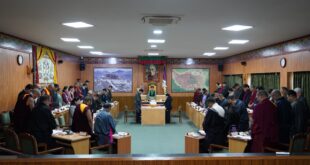
In summary, since the Chinese Communist government’s occupation of Tibet, the situation inside Tibet has been deteriorating year by year, as has appeared in successive international reports. Currently, Tibetan freedom is in the most critical situation and solidarity resolutions have been passed at previous sessions of the Tibetan Parliament-in-Exile. This time, at the 10th session of the 17th Tibetan Parliament-in-Exile, we felt it essential to pass a solidarity resolution regarding the critical situation inside Tibet.
Resolution
1. We reaffirm and express our utmost respect for the noble aspirations and courageous spirit of all those patriotic brothers and sisters who have sacrificed their lives for the cause of Tibet and its people under the oppression and torture inflicted upon Tibetans by the Chinese government. We earnestly pray that under the blessed care of Avalokiteshwara, the Buddha of compassion, they may be reborn in the Land of Snow and achieve outstanding accomplishments for Tibet’s religion, polity and people. We extend our profound condolences to all their families and relatives.
2. We strongly oppose the Chinese government’s sinicization policy which is carried out unlawfully involving the establishment of more colonial style boarding schools than ever before to separate Tibetan children as young as four years old from their parents, communities, language and culture; forcing monasteries to impose age restrictions and expel hundreds of young monks and nuns; forcibly closing private schools and eliminating Tibetan language from college entrance examination, all of which aims at the cultural genocide of the Tibetan people. We demand that Tibetans be granted freedom to use the Tibetan language.
3. We demand the immediate release of all Tibetan political prisoners suffering under Chinese oppression including the Eleventh Panchen Lama, Jetsun Tenzin Yeshi Trinley Palsangpo, popularly known as Gedhun Choekyi Nyima. China must take responsibility for their well-being and guarantee their fundamental rights.
4. Historically, Tibet was never part of China and has always been a sovereign independent country. While we remain committed to resolving the current Sino-Tibet conflict through dialogue based on the Middle Way policy, we strongly assert that if China continues to avoid meaningful negotiations through evasive tactics, the Chinese government will bear full responsibility for any critical situations that may arise in the future.
5. In connection with His Holiness the Great Fourteenth Dalai Lama reaching the age of 90, His Holiness graciously bestowed the auspicious decision that the lineage of the Dalai Lama will continue. Pertaining to the resolution of the 15th Tibetan Religious Conference, any politically motivated interference by the Chinese Communist government will never be recognized.
6. On the 60th anniversary of the establishment of the so-called Tibet Autonomous Region, a delegation called the ‘Central Government Delegation’ arrived in Lhasa, the capital of Tibet. On that occasion, they deployed political tactics to compel Tibetans to perform orchestrated shows of enthusiastic reception. They emphasized the need for education and promotion on Communist Party’s history and politics, the need to strengthen the use of the Chinese language and the need to encourage ethnic intermarriage. In short, this clearly revealed a plan to completely eradicate the Tibetan national identity. Therefore, we utterly reject and oppose it.
7. We express our solidarity with the desperate situation that Tibetans inside Tibet have endured and continue to endure under the most brutal oppressive policies of the Chinese government since the occupation of Tibet, living in unbearable suffering day and night. We pay tribute to the noble aspirations, heroic courage and incomparable deeds of all patriotic brothers and sisters both living and deceased. Tibetans in free countries must seize every opportunity to strengthen Tibet advocacy, lobbying governments and other activities with greater unity and determination than before to strengthen efforts to fight for Tibet’s just cause and preserve Tibet’s religion, culture, language, scripts, customs and traditions. And so be it adopted accordingly with the unanimous approval of the Tibetan Parliament-in-Exile on September 13, 2025.
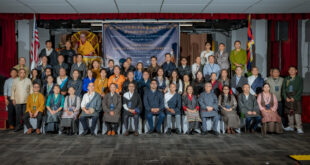
The above resolution was passed with unanimous approval by the 17th Tibetan Parliament-in-Exile during its 10th session on 13th September, 2025.
* This is an English translation of the Tibetan original, in case of any discrepancy the latter should be considered authoritative and final for all purposes.