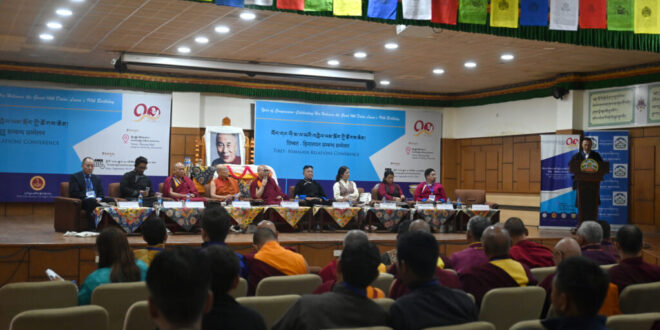
Dharamshala: The five-day Tibet-Himalaya Relations Conference, scheduled from 3 to 7 September 2025, commenced earlier today at the Sikyong Hall in Gangchen Kyishong with a brief inaugural ceremony graced by the presence of Chief Guest Sikyong Penpa Tsering and Special Guest Speaker Khenpo Sonam Tenphel.
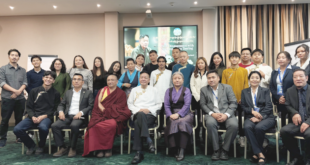
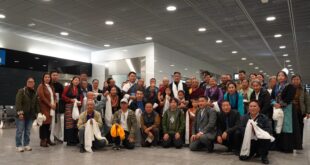
Jointly organised by the Tibet Policy Institute (TPI), the Dalai Lama Institute for Higher Education, the College for Higher Tibetan Studies, and the Monlam Charitable Trust, the conference saw participation from a diverse group, including royal lineages from across the Himalayan countries and communities, scholars, and around 30 students from Himalayan regions. Although more than 120 participants were expected, representatives from Lahaul-Spiti and Kinnaur could not attend due to road disruptions caused by recent heavy rainfall.
Tempa Gyaltsen Zamlha, Deputy Director of the TPI, served as the master of ceremony and welcomed the gathering. The opening remarks were delivered by Secretary Dawa Tsering, Director of the TPI, who emphasised the importance of the conference. He highlighted the shared religious and cultural heritage between Tibet and Himalayan communities, stating that such gatherings are crucial for stakeholders to discuss their common past and collective heritage.
Before addressing the gathering, Chief Guest Sikyong Penpa Tsering extended his appreciation to Secretary Dawa Tsering, who is soon to retire, and acknowledged his colleagues for organising the event. He also briefly highlighted Secretary Dawa Tsering’s previous role as the Representative of His Holiness the Dalai Lama to Taiwan.
Sikyong then greeted the distinguished scholars and royal descendants present, stating, “This conference deals with the historical relationship, cultural relationship, and commercial relationship between the Himalayan states and Tibet, and try to get a better understanding of how each one of us influenced each other and interacted with each other over the centuries. And how we managed to keep our relationships at peace with each other because of our very strong cultural relationship. So only because of the occupational Tibet by communist China in 1950s things changed, and that also needs to be known to the world.”
He further continued, “We follow the Middle Way Approach as the official policy of the Central Tibetan Administration. This was proposed by His Holiness, approved by a large majority of the Tibetans and unanimously adopted by the Tibetan Parliament in Exile way back in 1997.”
Expounding on the two ends of the Middle Way Approach, Sikyong explained that one end represents Tibet’s historical status as an independent state, and the other reflects the current situation of Tibet under the repressive Communist regime. “So, in between, we have to find a middle way, which His Holiness called ‘genuine autonomy.’ Because Tibet—even now—is known as an autonomous region, with autonomous prefectures and counties, but there’s no real autonomy there. His Holiness is talking about meaningful autonomy, not just in name but also in practice. To achieve that, we need a negotiated solution, and for that to happen, China must come to the negotiating table. For this purpose, we slightly changed our strategy—to gain recognition for the Middle Way Approach by emphasising both ends of the issue.”
He also apprised the gathering of the efforts made by the Central Tibetan Administration and Tibetan NGOs in advocating for the rights currently denied under the Chinese Communist Party.
Speaking about the other end—the historical status of Tibet as an independent state, Sikyong stated, “For two long years, we worked with the U.S. Congress from 2022 to 2024, and we got this law called the Resolve Tibet Act passed in the U.S. Congress and signed into law by President Biden last July. This law states that Tibet is an unresolved conflict that needs to be resolved under international law.”
Sikyong further detailed the provisions under the Resolve Tibet Act to raise awareness among the attendees from the Himalayan countries.
Touching upon the deeply spiritual connection shared across the region, he also spoke about the Chinese Communist Party’s attempts to claim authority over the recognition of the reincarnation of His Holiness the Dalai Lama. Sikyong highlighted His Holiness’ reaffirmation to continue the institution of the Dalai Lama during the 15th Tibetan Religious Conference—a development that denies Beijing’s claims and was extensively covered by global media in July.
Following Sikyong’s address, Speaker Khenpo Sonam Tenphel shared his insights on the aims and significance of the conference.
A message from His Holiness the Dalai Lama to the conference participants was read aloud by the Director of TPI before the conclusion of the inaugural session.