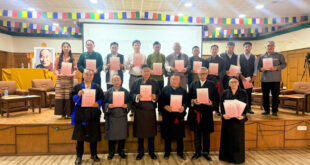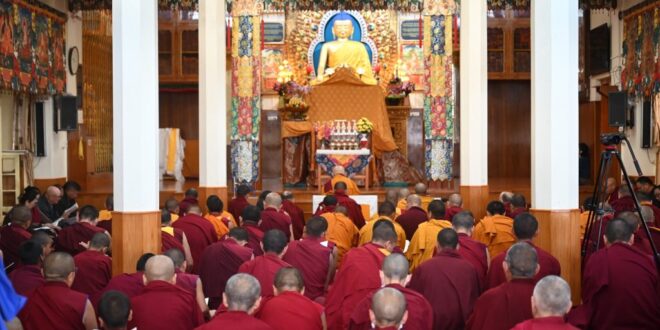
Dharamshala: The Department of Religion and Culture of the Central Tibetan Administration (CTA) organised a prayer service this morning from 9:30 to 10:30 at Tsuglagkhang to honour the sacrifices made by Tibetan protesters who participated in the 1989 demonstrations against the Chinese government.
In 1989, thousands of Tibetans took to the streets of Lhasa to express their resentment against policies imposed by the Chinese government, while also marking the 30th anniversary of Tibetan National Uprising Day. In response, Chinese authorities imposed martial law and opened fire on protesters, resulting in hundreds of fatalities and many more injuries.
These expressions of resentment were rooted in Beijing’s encouragement of Han workers to migrate to Tibet and the resulting unequal distribution of benefits and opportunities between local Tibetans and the Han population. This led to significant economic and social disparities. The situation was further exacerbated by restrictions on religious freedom and the prioritisation of the Chinese language over Tibetan in official communications and employment opportunities. The unrest was also partly linked to the sudden death of the 10th Panchen Lama, who is deeply revered by every Tibetan, under suspicious circumstances.
Martial law was officially declared in Lhasa at midnight on 7–8 March 1989, marking the first time martial law had been imposed in the history of the People’s Republic of China. It was a harsh and unprecedented response to three days of demonstrations that had been sparked by the shooting of Tibetans by security police in the Barkor area.
At least 70 Tibetans were reportedly shot dead during the demonstrations from 5 to 7 March. Unofficial reports state that at least a thousand Tibetans were detained in the early hours of 8 March and during the crackdown that followed. The exact number of deaths and detentions remains unclear due to strict security measures in Lhasa at the time and the city’s fluctuating population.
Since then, the Central Tibetan Administration has held an annual prayer service on 8 March to remember and pay homage to Tibetans who lost their lives or suffered during the demonstrations.
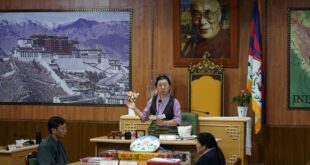
During the prayer ceremony, Sikyong Penpa Tsering remarked that the gathering also served as a tribute to all those who sacrificed their lives for the rights and freedom of the Tibetan people, while expressing solidarity with their bereaved families.
Noting the growing number of conflicts and wars across the world, Sikyong added that the prayers were also dedicated to those affected by these crises, with the hope that peace and stability may prevail globally.
The prayer service was attended by the leadership and staff of CTA, as well as Tibetan residents of Dharamshala.