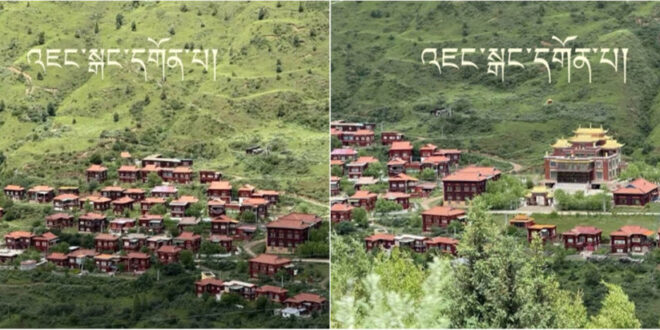
Dharamshala: In a grave assault on Tibetan religious heritage, Chinese authorities have demolished over 300 Buddhist stupas and a revered Guru statue in the Drakgo (Ch: Luhuo) County, Karze (Ganzi) Tibetan Autonomous Prefecture in the traditional Tibet’s province of Kham last month, sources from Tibet report amid heightened restrictions in the region.
The destruction took place in late May or June 2025 at Lungrab Zang-ri near Janggang Monastery, where Chinese forces razed hundreds of medium-sized stupas of Tibetan Buddhism and three larger Buddhist stupas. In a brazen act of cultural vandalism, authorities also destroyed a newly constructed statue of Khenpo Jigme Phuntsok, the late founder Abbot of Serthar Buddhist Institute, and a sacred statue of Guru Padmasambhava, generally referred to as Guru Rinpoche (meaning “precious master” in Tibetan). Such acts have left the local Tibetans and community deeply traumatized.
Information Blackout and Mass Arrests
Following the demolitions, Chinese authorities have imposed an iron curtain of silence over the region. Anyone attempting to share information and even talk about the destruction with the outside world faces immediate detention on charges of “leaking state secrets.” The entire area surrounding the demolition site has been sealed off, and no one is permitted entry or exit.
Chinese officials have cynically justified the destruction by claiming the stupas were built on “government land” and violated unspecified regulations. The stone debris from the sacred structures has been completely cleared, erasing all traces of these centuries-old symbols of faith.
Systematic Cultural Annihilation
This latest assault represents, what Tibetan sources inside Tibet call “second phase of Cultural Revolution”, a deliberate campaign to “Sinicize” Tibetan Buddhism and systematically eradicate
Tibetan cultural identity. The destruction aligns with China’s broader strategy of cultural genocide in Tibet, designed to erase Tibetan culture by forcibly aligning religious practices with the Chinese Communist Party’s political agenda.
“The crackdown has intensified following Decree No. 22 issued by the National Religious Affairs Bureau on 1 December 2024, which mandates that all monasteries must operate under strict government control starting 1 January 2025, through the implementation of Article 43 of the Monastery Management Regulations”, said the source.
Reign of Terror Against Tibetan Religious Leaders
Chinese authorities have unleashed a reign of terror against Tibetan religious leaders, scholars and influential Tibetan leaders. Tibetans who refuse to comply with the Chinese government’s assimilationist “re-education” campaigns are subjected to arbitrary detention on fabricated charges, long-term imprisonment, and systemic social exclusion. In the most egregious cases, they have disappeared or secretly executed.
The persecution escalated when Tulku Hungkar Dorje was repeatedly interrogated and falsely accused of refusing to host China’s imposed Panchen Lama, composing long-life prayers for His Holiness the Dalai Lama, and resisting Chinese policies in his educational work in Golog, Amdo. Forced into hiding in Vietnam, he was later found dead in Chinese police custody on 28 March, following a covert joint operation by Chinese and Vietnamese authorities. Despite international demands for transparency, both governments have remained silent, concealing the truth through information blackouts and a secret funeral.
Under the new monastery regulations, no Tibetan lama, religious leader or reincarnate Tulkus can conduct religious activities freely. Some religious leaders are being held under house arrest. The systematic suppression has created a climate of fear and desperation among Tibet’s Buddhist community.
The crackdown has extended beyond Drakgo County. In June, authorities imposed severe restrictions in the Karze region related to the demolition. During July, as the world celebrates the 90th Birthday of His Holiness the Dalai Lama and his teachings globally, Chinese authorities banned all public gatherings in the Karze and regions close by until the 23rd of July 2025.
Khenpo Tenga (བསྟན་དགའ།) of Janggang Monastery, who was involved in constructing the stupas and statues at Lungrab Zang-ri, is being deprived of his movements and religious activities, including meeting with his devotees. Similarly, monasteries in Tibet’s Amdo region have been forbidden to permit more than five monks to travel together during the period surrounding His Holiness the Dalai Lama’s birthday celebrations.

(In Picture) Religious ceremony held at 99-foot-tall Buddha statue in Kham Drakgo before its demolition
Pattern of Destruction
This assault follows a disturbing pattern. In November 2021, under orders from Drakgo County Party Secretary Wang Dongxin, authorities closed the Drakgo Gaden Namgyal Ling Monastery school. On 12 December, they demolished two large statues near the monastery and destroyed 45 mani wheels (prayer wheels).
The latest destruction at Janggang’s Lungrab Zang-ri represents an escalation of China’s war against Tibetan Buddhism, with hundreds of stupas and sacred statues reduced to rubble in a single devastating operation.
Information Suppression Continues
Sources report that obtaining detailed information about the situation remains extremely difficult due to the complete communications blackout imposed by Chinese authorities, highlighting the systematic nature of China’s campaign to silence witnesses to its cultural destruction in Tibet.
This developing story represents yet another chapter in China’s decades-long assault on Tibetan religious and cultural identity, as Beijing continues its relentless campaign to erase Tibet’s spiritual heritage from existence.
– Filed by UN, EU, and the Human Rights Desk, Tibet Advocacy Section, DIIR