New Delhi: The three-day festival, “Spirit of Tibet: Celebrating Culture and Compassion,” commenced today at the India International Centre in New Delhi, bringing together scholars, policymakers, writers, cultural practitioners, spiritual leaders, and members of the public to celebrate Tibet’s rich cultural heritage and foster greater understanding of contemporary issues concerning Tibet.
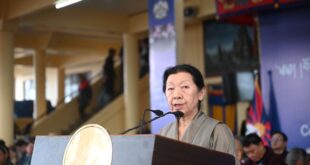
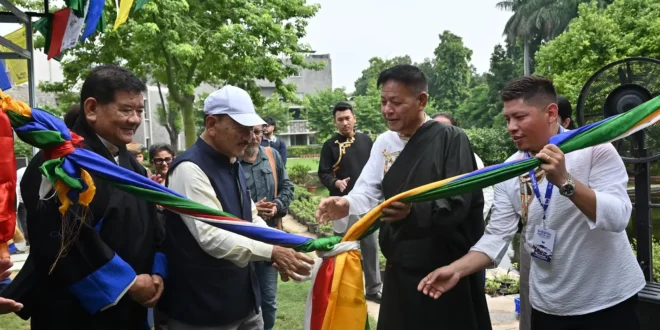
Organised from 3 to 5 September, the festival began with a brief inaugural ceremony at the Gandhi-King Memorial Plaza, featuring prayers led by a Tibetan Buddhist monk, followed by the inaugural address by Sikyong Penpa Tsering.
In his address, Sikyong called upon the gathering to remain vigilant regarding developments concerning China, particularly in light of the recently enacted “Promoting Ethnic Unity and Progress Law” and its potential implications for Tibetans and other ethnic communities in China.
He observed that the legislation appears to be inconsistent with commitments contained within the People’s Republic of China’s own constitutional and legal framework.
“Unfortunately, the recently enacted Ethnic Unity Law takes China in precisely the opposite direction. Rather than creating conditions for trust and reconciliation, it institutionalises policies of assimilation under the guise of ‘national unity.’ It replaces dialogue with compulsion and diversity with conformity,” Sikyong Penpa Tsering said.
He further emphasised that sustainable peace and stability cannot be achieved through coercion or by suppressing cultural, religious, and linguistic identities.
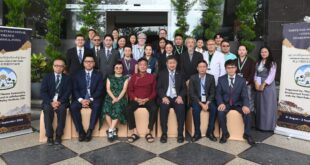
The inaugural seminar, titled “Civilisational Confluence, Present Realities, and Strategic Horizons,” brought together distinguished voices from the fields of strategic affairs, journalism, academia, and China studies.

The panel comprised Sikyong Penpa Tsering; Prof. C. Raja Mohan, leading columnist, contributing editor at The Indian Express, and Visiting Professor at the Institute of South Asian Studies, National University of Singapore; and Brigadier Anshuman Narang, author, China scholar, OSINT expert, and founder of the Atma Nirbhar Soch think tank. The session was chaired by Nitin A. Gokhale, author, journalist, and national security analyst.
The seminar examined Tibet’s civilisational heritage, its contemporary realities, and its broader strategic significance within the evolving geopolitical landscape.
Throughout the three-day festival, a series of seminars, lectures, and documentary screenings will explore a range of themes relating to Tibet’s culture, history, spirituality, environment, and contemporary relevance.
Among the eminent personalities participating on the first day are Prof. Amitabh Mattoo, Dean, School of International Studies, Jawaharlal Nehru University, Delhi; Shri Wajahat Habibullah, former Chairperson of the National Commission for Minorities, Government of India; Shri Kabir Bedi, Actor and Author; and Ven. Geshe Dorji Damdul, Director of Tibet House, Delhi. They shared their perspectives on a range of issues concerning Tibet and its cultural and contemporary significance.
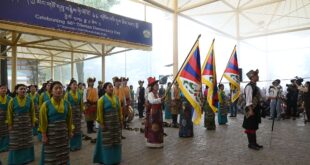
Alongside the intellectual and academic discussions, the India International Centre has been transformed into a vibrant showcase of Tibet’s diverse cultural traditions.
A major attraction of the festival is the creation of a Tibetan Buddhist sand mandala, providing visitors with an opportunity to witness an important dimension of Tibetan Buddhist artistic and spiritual practice. The festival also features cultural performances, an exhibition documenting Tibet’s historical and political evolution, and a hands-on Tibetan wood-painting workshop.
Together, these activities offer visitors an immersive experience of Tibet’s enduring cultural traditions while highlighting the depth, continuity, and resilience of Tibetan civilisation.
The festival received an enthusiastic response on its opening day, with more than 500 people attending the various programmes and engaging with the cultural exhibitions, performances, and discussions.
The three-day festival is being organised by the Department of Information and International Relations (DIIR), Central Tibetan Administration, in collaboration with Foundation for Non-violent Alternatives and The Tibet Fund.
Through its diverse programme of cultural, academic, and public engagements, the festival seeks to underscore the enduring relevance of Tibetan culture, compassion, and civilisational values, while providing a platform for meaningful dialogue and promoting greater public understanding of Tibet and its contemporary realities.