Introduction
Soon after coming into exile in 1959, the spiritual and temporal leader of the Tibetan people, H.H. the 14th Dalai Lama democratized the Tibetan political system as He strongly believed that no system of governance can ensure stability and progress if it depended solely on one person without support and participation of the people in the political process. Therefore, it is said that Tibetan democracy was gifted by H.H. the Dalai Lama, unlike other democracies which often takes birth after prolong public uprisings and protests, even at the expense of sacrifice of people’s lives.
In 1974, H.H. the Dalai Lama introduced the first ever Tibetan Electoral Rules. Later, in 1990, the Special Conference of the Tibetan People passed a resolution to revise the Tibetan Electoral Rules. The charter for Tibetans-in-exile was also drafted in the same year.
In 1991, the 11th Tibetan Parliament-in-exile adopted the Charter for Tibetans in exile. Consequently, the three pillars of democracy viz, the Kashag (executive), Tibetan Parliament-in-exile (legislature) and Tibetan Supreme Justice Commission (judiciary) came into existence. Similarly, the autonomous bodies of a democratic government namely, the Election Commission, Public Service Commission and Audit Commission were formed.
The Election Commission is an autonomous constitutional authority responsible for administering the elections of Sikyong, the Head of the Tibetan Administration, the Speaker, Deputy Speaker and members of the Tibetan Parliament-in-exile, Settlement Officers, Local Tibetan Assemblies, members of the Tibetan Freedom movement and any major Tibetan election.
The Election Commission is headed by the Election Commissioner who is appointed by the Tibetan Parliament in exile for a tenure of 5 years or until he/she attains the age of 65 whichever comes first. The Tibetan Parliament also appoints two additional Election Commissioners when Tibetan people goes into poll in every 5 years.
Roles & Responsibilities
-
The Election Commission has the full authority to the administration of electoral affairs of the Central Tibetan Administration.
-
It has the authority to deal with any electoral disputes and take decision accordingly.
-
It shall draft the electoral rules and also revise it if needed before putting it up with the Tibetan Parliament-in-exile for its approval
-
It shall appoint the Regional Election Commissioner and Assistant Regional Election Commissioner
-
The Chief Election Commissioner shall discuss with the Kashag on the appointment and transfer of its office staff by Kashag
-
The Chief Election Commissioner shall control the annual budget and accounts of the office.
-
Staff of the Election Commission shall seek the Chief’s approval for any official tour
-
The Chief Election Commission shall seek his/her official tour approval from Standing Committee of the Tibetan Parliament-in-exile.
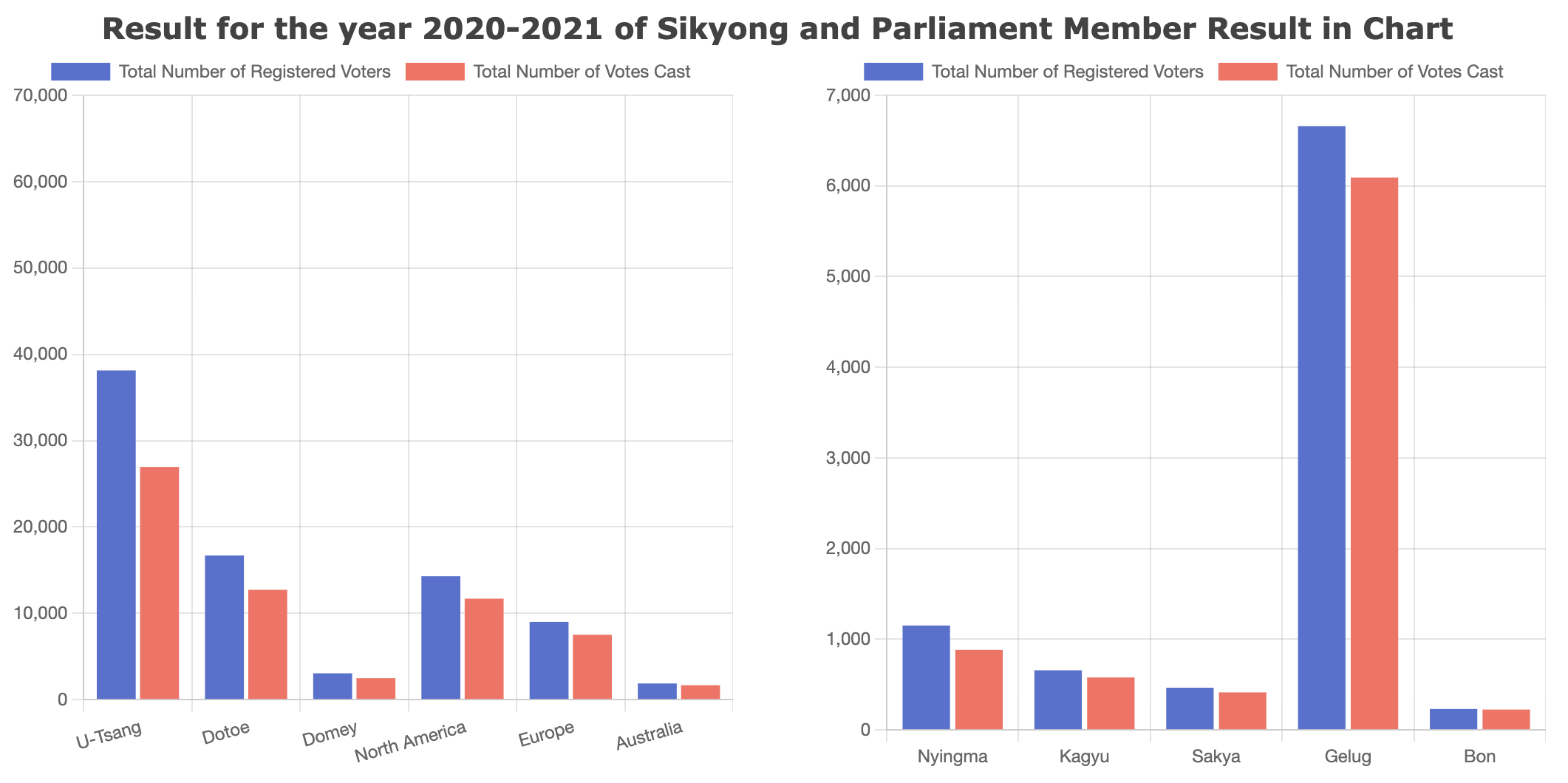
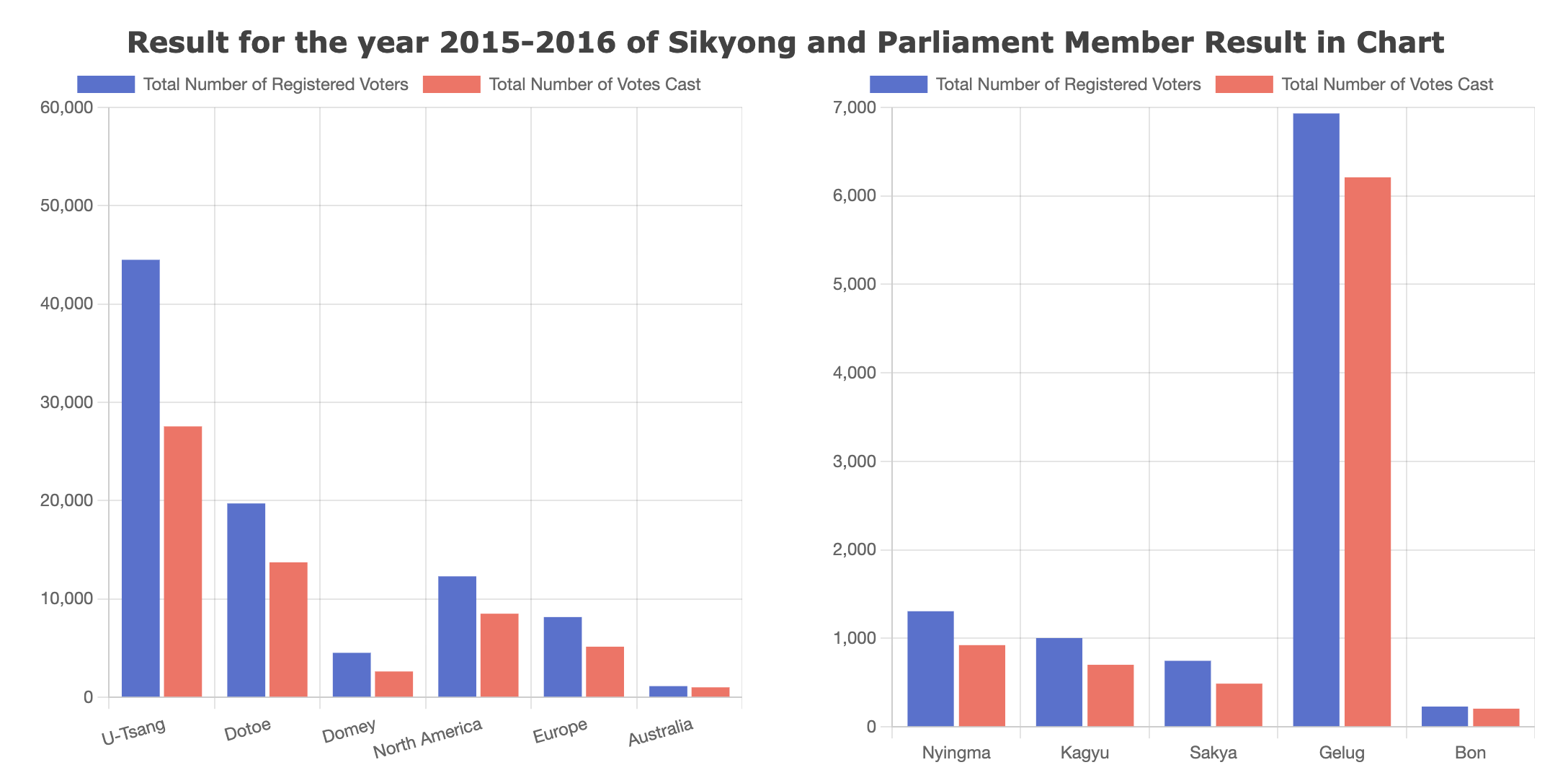
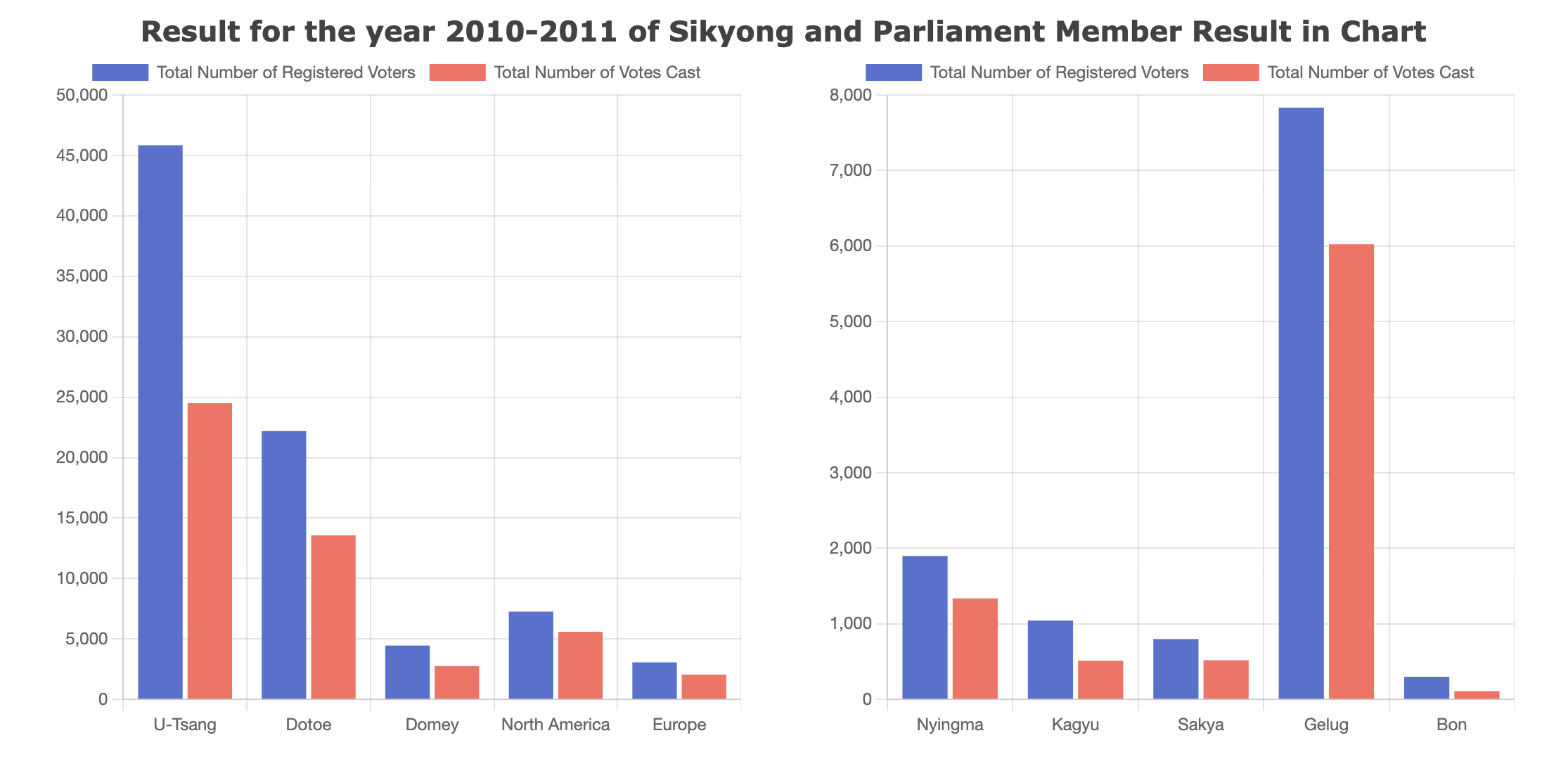
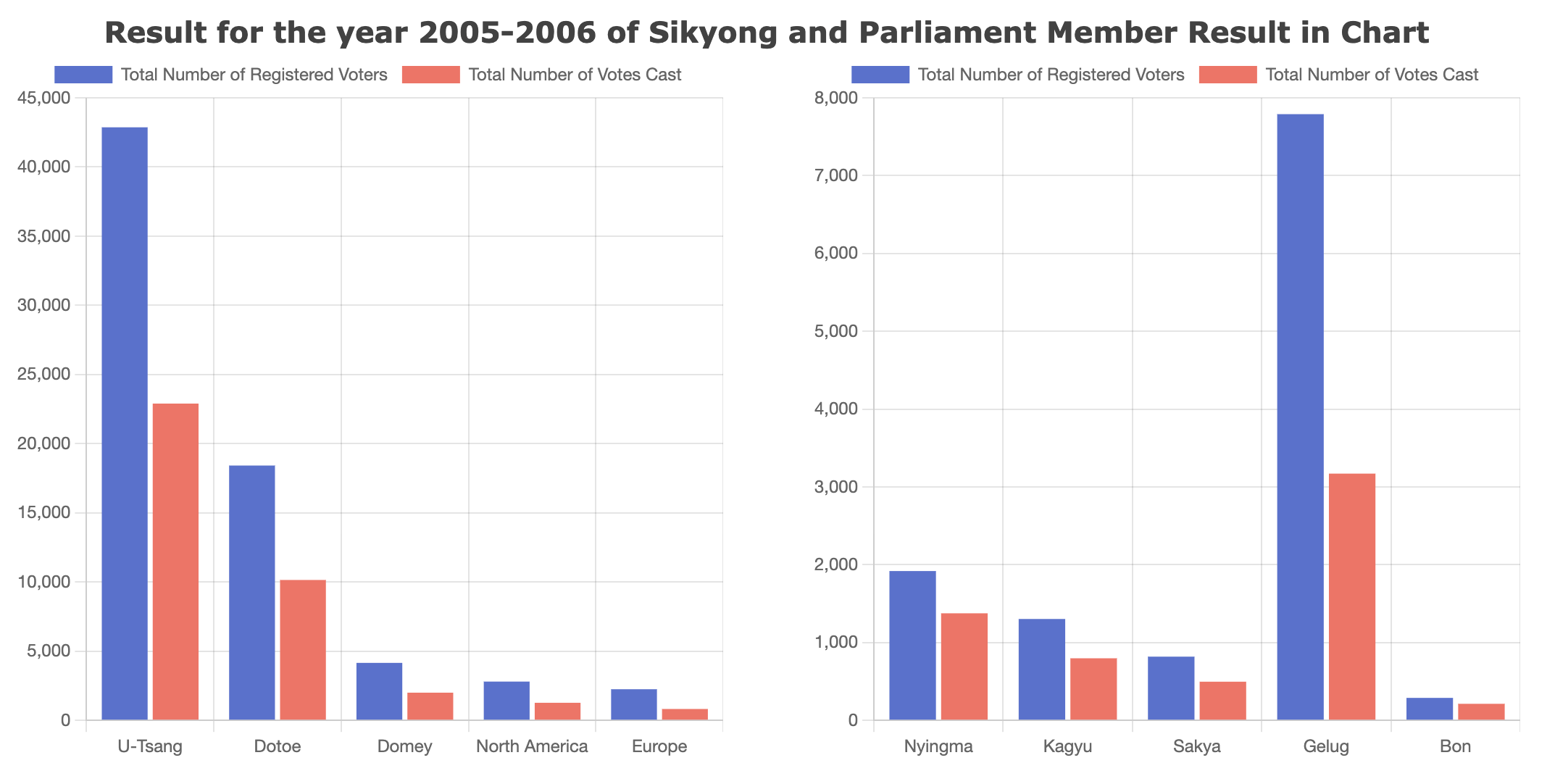
Combined Result of Sikyong and Parliament Members over the years in Chart